Products
Applications
Documentation
About
HVAC insulation is vital for creating interior spaces that are comfortable and energy efficient because it helps control two critical factors: sound and temperature.
By choosing low-VOC, formaldehyde-free and Asthma & Allergy Friendly® Certified insulation, you can help reduce indoor air pollution, improve air quality and have peace of mind you’re creating spaces that support the well-being of others.
Insulation helps make HVAC systems work more efficiently and reduces the noise associated with ductwork.
In the normal course of operation, HVAC ductwork can be noisy. Loud cracks and booms can be distracting and discomforting in the workplace or in the home. HVAC ducting insulation has acoustical properties that help absorb these noises and minimize sound transfer.
HVAC insulation also has thermal properties, which improve the overall temperature control of the system, reduce energy loss, and help the system operate more efficiently — meaning an overall reduction in utility costs.
When uninsulated equipment runs at below-ambient temperatures, condensation can form. Proper insulation — along with a vapor retarder — is a crucial part of a complete condensation control system, which will minimize condensation build-up.
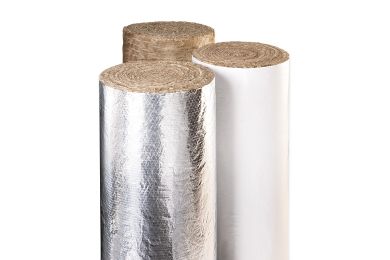
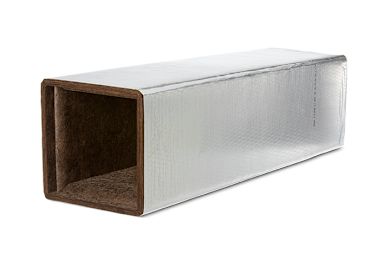
Which type of HVAC insulation is right for your project? Here are the different types of HVAC insulation and their uses: